


Acorns in abundance
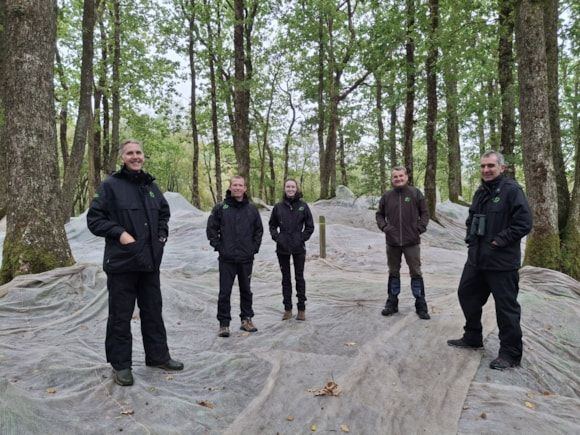


FORESTRY and Land Scotland (FLS) has been making the most of an exceptional year for acorn production in its bid to restore valuable oakwoods along Loch Trool in Galloway.
Occurring around once every four years, a “mast year” involves certain species of trees – including oaks – producing unusually high numbers of nuts and berries.
FLS have taken advantage of this to collect and propagate the acorns.
The saplings grown from the locally sourced acorns will be used as part of converting productive conifer back to native oakwoods along Loch Trool, linking two remnant areas of ancient semi-natural oak woodland.
FLS stewardship forester Mo Hastie said: “The mast year provides us with a plentiful stock of local seeds. This means rather than having to introduce oak saplings from outside the area, which may not be as well adapted to local site conditions, we can use acorns that can preserve the genetic identity of the Glentrool oakwoods.
“In times of abundance, we look to collect as much as possible given the difficulty in storing acorns and significant reductions in viability in the second year of sowing.”
The collected acorns have been transported to a tree nursery to be propagated and will be brought back to the area for planting out.
The Glentrool Oakwoods are designated as a Site of Special Scientific Interest (SSSI). They are important remnants representing the once extensive broadleaf woodlands that were found across the Galloway Hills. The woods are noted for their lichen and bryophyte communities and support notable insects and breeding bird populations.
Related News


