


Critically-endangered species returns to upstream River Annan


A CRITICALLY-endangered species of eel has officially returned to upstream River Annan thanks to an eel pass installed at Milnby Weir in 2022.
The first river survey in three years has provided evidence that young European Eels are now populating the upper Annan, following installation of the pass.
The partnership environmental project, involving the Nuclear Decommissioning Authority, Nuclear Restoration Services, SEPA and Scottish Water, aimed to provide the young eels with a route to bypass the weir and reach the upstream area of the river where they can access 675km of vital habitat to thrive.
The weir acts as a barrier preventing the elvers from reaching the upper part of the river, with the current structure dating from the 1980s to provide water to the Chapelcross nuclear power station, which is currently undergoing decommissioning.
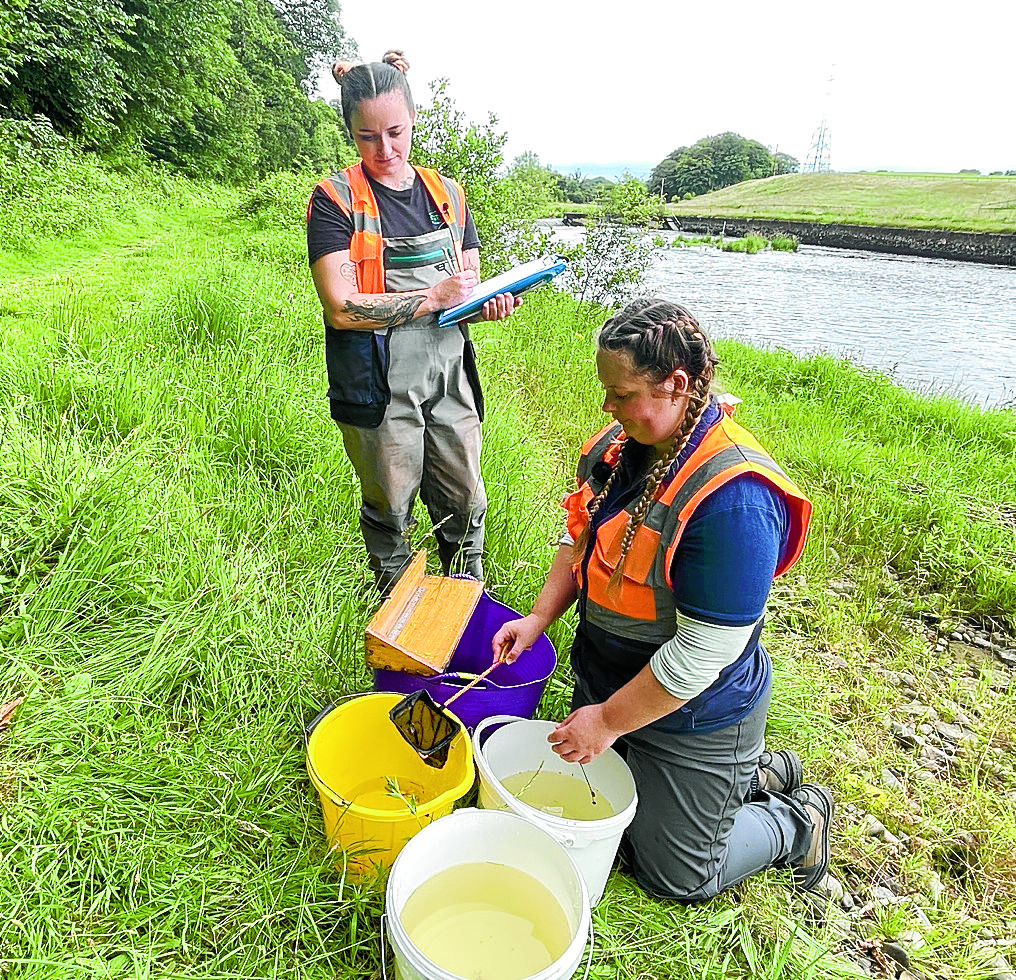
Now, three years on from the eel pass being installed, the Galloway Fisheries Trust has carried out survey work which found baby eels and young adults in multiple locations above the pass, showing it is providing a viable route upstream for the species.
Technical team manager at Scottish Water Euan Innes said: “It is brilliant that elvers have been found upstream of the weir, it provides us with evidence that the eel pass has been successful and hopefully we will see a lot more eels in the river here as the years go on.”
He added: “These eels are very important to freshwater ecology in Scotland and Europe, helping to support other protected species such as osprey and otters. We are not just restoring a single species here, we are attempting to put back a real building block of the ecology of the river system – these survey results are a really positive sign that things are going in the right direction.”
Since the 1970s, the population of European Eels in is estimated to have fallen by around 90 per cent, leading to it being regarded as critically endangered.
The eels spend much of their adult lives in our rivers, before travelling to the Sargasso Sea to spawn – the young eels are then carried back towards Europe on the currents and the cycle starts over again.
Related News