

A ‘dram site’ ?greener
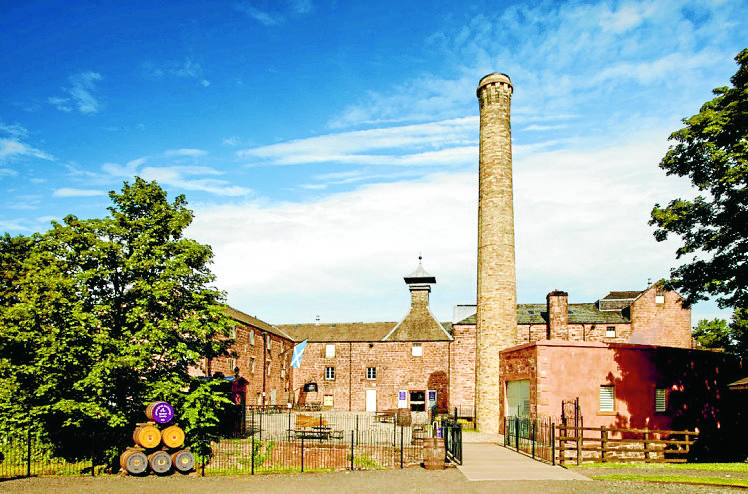


A DISTILLERY on the outskirts of Annan is leading the race to produce net zero whisky.
Exergy3, a clean heat technology company, has announced the commissioning of a first-of-a-kind decarbonised heat project at Annandale Distillery.
The pioneering project delivers high-temperature process heat of up to 1200°C using low and zero-carbon electricity. This represents a major breakthrough in the affordable decarbonisation of industrial heat, which currently accounts for around 18 per cent of global CO2 emissions and is notoriously difficult to decarbonise.
The project was delivered by Exergy3 in partnership with Annandale Distillery and Cochran Ltd, supported by funding from the UK Department for Energy Security and Net Zero through its Net Zero Innovation Portfolio.
The award-winning distillery aims to become one of the first in the world to produce low-carbon whisky.
They have a 12-step decarbonisation plan, which also includes bottling and maturing whisky on site to reduce road miles, switching to electric vehicles where possible, and exploring alternative waste-reuse options for spent grain and carbon dioxide.
Professor David Thomson, co-founder of Annandale Distillery, said: “This is a first – not just for the whisky industry or Scotland, but globally.
“Heat-intensive industries like ours are under increasing pressure to decarbonise, and solutions that can deliver high-temperature heat without fossil fuels have been hard to find. “The fact that it does so economically, while also helping tackle the rising costs of balancing the electricity system, makes it incredibly powerful.”
[caption id="attachment_67847" align="alignnone" width="680"]
Exergy3’s modular thermal energy storage system converts renewable electricity into thermal energy and stores it at ultra-high temperatures. The system then discharges hot air at temperatures between 50°C and 1200°C, depending on industrial requirements.
At Annandale Distillery, the system delivers hot air of up to 530°C, which is turned into green steam by a Cochran boiler and used in the distilling process.
Eric Daglish from Cochran Ltd added: “Across industry, we see growing interest in alternatives to fossil fuels as companies work towards their carbon reduction goals.
“One of the biggest challenges has been finding solutions that are both practical and economically feasible, but this technology shows that it’s possible. We are proud to be part of a project that marks such a significant milestone for the wider decarbonisation of industry.”
What makes the solution particularly distinctive is its use of renewable electricity that would otherwise be curtailed.
In this project, the system utilises wind power, which is the most abundant renewable energy source in Scotland.
Related News