

Remembering the Far East war


HORRIFIC conditions and cruelty faced by servicemen and women captured by the Japanese during World War II were highlighted at Westminster this week.
They included the experience and courage of a Dumfriesshire farmer turned soldier, whose remarkable story was outlined to a hushed Commons chamber by David Mundell MP.
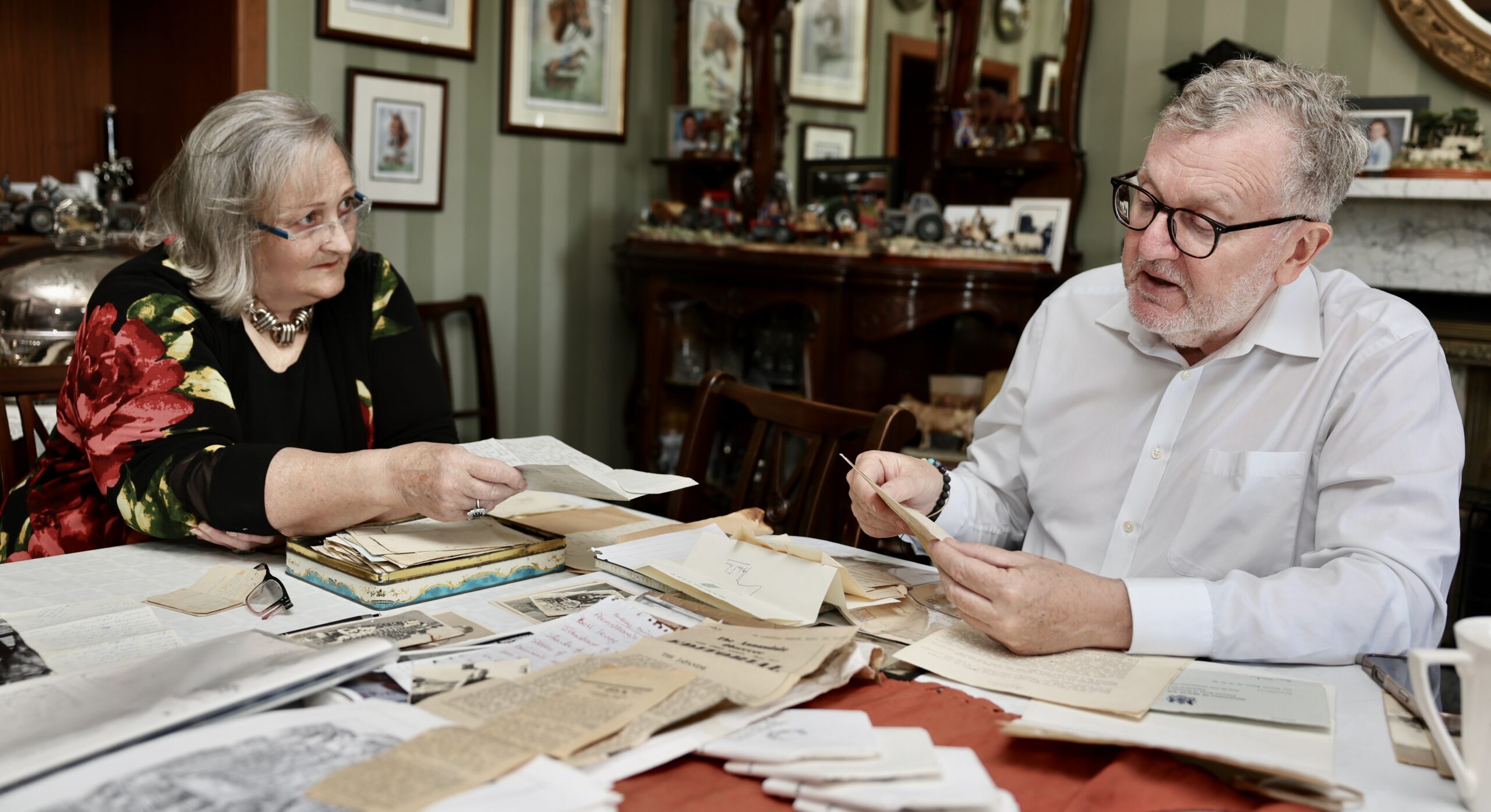
He told colleagues: “I met with my constituent Margaret Barbour, of Rosefield Farm, near Annan, to hear about the experience of her father Sergeant Major Jock Wyllie, and look through the letters, paperwork and photographs she has kept.
“A riding instructor in the Lanarkshire Yeomanry territorials, Jock was deployed in 1940 with the 155th Field Regiment of the Royal Artillery to the Far East. By 1942, after the fall of Singapore, he was taken prisoner by the Japanese.
“Thus began three years and eight months of unimaginable suffering. Jock was not a ‘guest’ of the Imperial Nippon Army, as their propaganda called it, he was their slave.”
Mr Mundell explained Jock spent time in Changi prison in Singapore before being sent to the notorious Kinseki jungle camp on Formosa, now Taiwan.
He continued: “Hundreds of Jock’s fellow prisoners died on that journey. There, along with hundreds of others, he was forced to work in copper mines in horrific conditions, often up to 18 hours a day. Starved, beaten, stripped of dignity.
“Men were tied to stakes under a burning sun, given salted rice, or left in bamboo ‘sweat boxes’ without water. And every day forced to take the walk past prisoners who been beheaded for their alleged misdemeanours and their heads then placed on poles with their full military headgear still being worn as the flesh around it decayed.
“Jock and his colleagues were reduced to skin and bone – he was over 12 stone when captured and barely six stone when released. The first local person to see him at the station on his return burst into tears at the sight of him.
“Red Cross parcels rarely arrived. Dysentery, beriberi and malaria ravaged the camp, but somehow, Jock managed to stay alive.”
[caption id="attachment_61490" align="alignnone" width="680"]
Mr Mundell explained that Jock became a beacon of hope for other prisoners in the darkness of the nights, as he sang ‘The Dumfriesshire Foxhounds,’ a tune that lifted spirits.
“But make no mistake,” stressed the MP, “The pain was ever-present. A bayonet wound to the leg. Malaria. A body permanently altered by malnutrition. And the memories that haunted him most — like the sight of Chinese babies thrown into the air and caught on bayonets. These were the horrors that time did not erase.
“Jock had missed nearly all of his son’s early childhood. Three times, his wife had been told he was presumed dead. Only seven letters made it home across the five years he was away and the ones from the camps censored to say how well he was being treated.
“He never gave in to bitterness, but the scars he carried — both physical and emotional — never truly healed.
“He returned to Lockerbie. He embraced the family and life he had left behind. He was one of the founders and, like his daughter Margaret, one of the stalwarts of Lockerbie Gala.
“Jock shared his stories not to gain sympathy, but to honour truth. To bear witness. He spoke of the Gurkhas, the ‘bravest little men,’ who moved like ghosts in the jungle.”
Mr Mundell urged colleagues at the special Commons sitting on Monday night to join him in remembering not just what Jock and his fellow Prisoners of War endured, but what they stood for: Duty, dignity, decency.
Following the debate, the local MP commented: “Many servicemen from the South of Scotland fought in the Far East and that is why commemorating this 80th anniversary of VJ Day is so resonant.
“The KOSB, with their proud lineage dating back to 1689, found themselves far from their homeland, in the dense jungles and mountainous terrain of Asia, playing a key role in the long, gruelling campaign to halt and reverse Japanese advances.
“On a personal note, following my late mother Dorah’s wartime service in the ATS, one of her strongest wartime opinions remained that those who fought in the Far East in the war against Japan were never properly acknowledged for their service or their suffering as prisoners of war.
“I was grateful to work with Margaret on this as she has championed the cause of the surviving prisoners of war and their families down the decades.”
Related News