

Behind the scenes at Old Bridge House
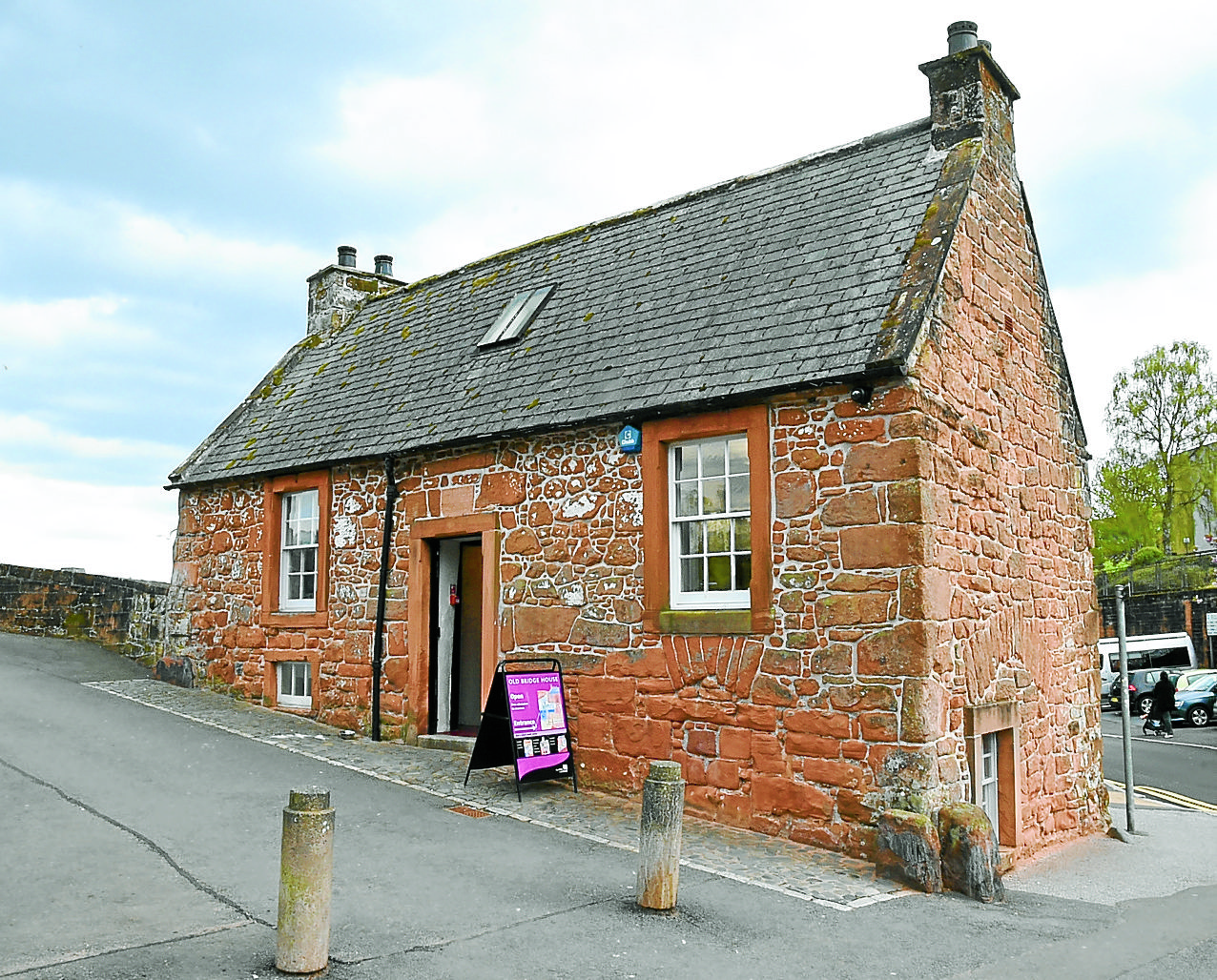


IF the walls of the Old Bridge House could talk, what would they say? Museum curator Judith Hewitt tells all in the next instalment of the Behind the Scenes series.
As Dumfries’ oldest house, the sandstone building has sat the western end of the Devorgilla Bridge since 1660. In that time it has served Maxwelltown as a barrel maker, an inn, a home and two flats, before becoming a folk museum in the 1960s.
[caption id="attachment_61574" align="aligncenter" width="636"]
The rear of the house, facing away from the bridge, is two storeys high, while there appears to be just one storey when viewed from the bridge. Judith explained: “This house has changed a lot since it was built, essentially we’ve lost a floor, there’s a floor of the house underground because the area around the house has been banked up several times.
“It was occupied until the 1950s which is when it fell into a state of disrepair, it didn’t have any electricity or running water and there was an old lady who live there called ‘Granny Black’ and she would actually sleep somewhere else and come back every day and sit outside because that’s how bad a condition it was in. But when she died it was empty and the museum curator at the time, Alf Truckell who ran Dumfries Museum from 1948 to 1982, he was inspired by folk museums, and wanted to create a museum different from the one up the hill. Rather than having things in cases and to do with rich royal burgh provosts and the like, he wanted this to be more of a people’s museum where things were on open display. And that what he did and it’s been open ever since.”
On average the Old Bridge House receives 15,000 visitors every year, Judith revealed that ‘more people pop in here than our other museums’.
[caption id="attachment_61575" align="aligncenter" width="680"]
Inside the house is divided into a number of rooms on two floors, each of which is home to a range of exhibits and artefacts representing a particular theme and a particular time period.
One room is staged to look as it would have during Granny Black’s time in the house from the late 19th to the early 20th century, with her photograph sat on the mantle, next to a larger portrait of her son John. Judith said: “About two years ago we had a phone call from a family member of Granny Black’s, her grandchildren, and they had found a photograph in their attic and it’s her son John who died in World War I, and we can only assume that she would have had her son’s portrait in the house. It’s really nice to have this back in the home where he was born and where she lived. As well, some memories of her grandson James Murray who came and visited and said ‘it looks just like when granny lived here’.”
The most surprising room on the upper floor boasts an impressive collection of dentist’s equipment from Dykes Dental Surgery, including a cabinet full of teeth. The collection certainly fits in at the folk museum as the Dykes family were well-known in Dumfries and Annan.
Judith added: “They were very involved with Riding of the Marches, Eric Dykes was Annan Cornet in 1947 and his wife was really actively involved as well.
“Lots of people remember the Dykes, but people remember what dentistry used to be like. One lady came in last year and fell into tears remembering experiences in dental chairs a bit like this one, and the thing that always strikes me when you come in is it still has a dentist, chemical smell.”
Downstairs takes on a more Victorian feel, with a kitchen with items dating back to the 1850s, including several irons and washing equipment from a bygone era.
[caption id="attachment_61577" align="aligncenter" width="680"]
A second is a bedroom from the 1870s and includes a brass and iron bed and a swinging cradle. Hanging from the head of the bed are suits of children’s clothes.
Some items still get reactions from visitors even now and Judith commented: “People always remember and comment on the slip bath and the hot water bottles.
“So many people visit here and talk about their grandparents and I think it brings back a lot of memories for them.
The items in here are lots of things from different houses that have been brought together to create a sense of what a bedroom might have looked like.”
[caption id="attachment_61578" align="aligncenter" width="536"]
The final room on the lower floor is what Judith describes as the the ‘childhood room’, This is home to many games, books, dolls and toys from the 1800s onwards. She explained: “This is one of the favourite rooms, certainly my daughter’s favourite room, she loves to sit at the desk and pretends she’s at school in the past and does drawings.
“I’ve been in here when visitors have had to explain what that is (points to an inkwell) to their grandchildren and tell them how it used to be someone who’s job it was to fill it up everyday and be the ink monitor.
“Little kids are fascinated by the view finders, they’ve never seen something so simple and not technological.”
For a small space the Old Bridge House is packed full of history and its offerings still impress both visitors and its caretakers.
Concluding, Judith said: “It still amazes me sometimes what items people are drawn to when they visit, it can be things they remember from the grandparents’ home or something they’ve never seen before.”
Related News