

Ancient human remains found near Moffat
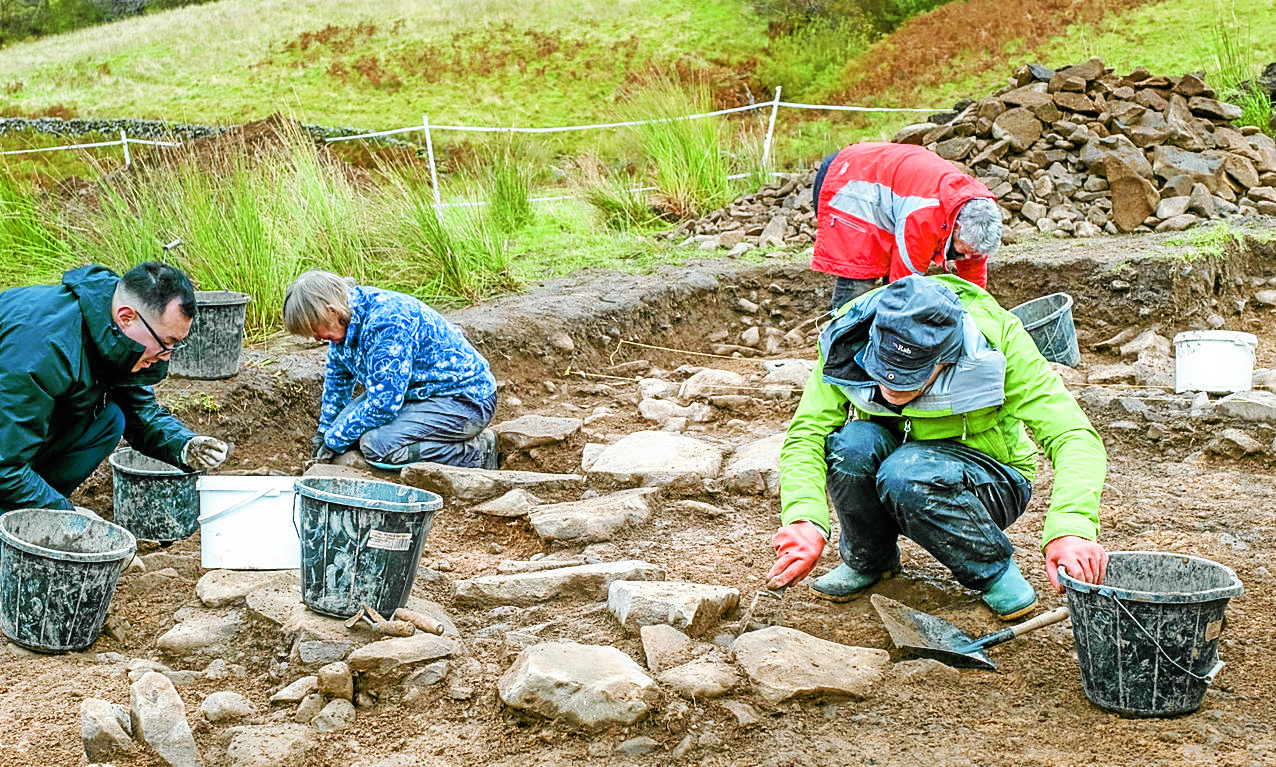


IRON Age human remains have been discovered during an archaeological excavation near Moffat.
The dig near Adie’s Brae was part of the Destination Tweed project’s community-based archaeology programme, Uncovering the Tweed which is investigating important sites of activity along the River Tweed and in the surrounding area.
Cremated remains were found during an initial excavation of the Adie’s Brae scooped settlement at Ericstane near Moffat on land owned by Borders Forest Trust. The dig also uncovered two roundhouses, pits and postholes as well as evidence of everyday domestic activity.
The burnt bone fragments were discovered in a small pit within the settlement, with specialist analysis later identifying them as human remains representing one individual, thought to be male and aged over 17. Radiocarbon dating indicates that the person was cremated somewhere between the second half of the 1st century BC and the end of the 1st century AD.
It is believed that the cremated remains represent a small deposit deliberately placed within or under a building, with the main funeral pyre located elsewhere.
[caption id="attachment_67779" align="aligncenter" width="751"]
Project manager Cathy MacIver, from AOC Archaeology Group, said: “Relatively few of these distinctive settlement types have been excavated using modern archaeological methods so our aim at Adie’s Brae had been to date the settlement, to understand the structure of the enclosure, and hopefully make other discoveries to show how people lived their daily lives. Uncovering cremated remains was both exciting and unexpected, it gives us an important insight into the rituals and practices of past societies.
“We’re greatly looking forward to continuing the excavations at this fascinating site.”
Furthermore, evidence was found of Iron Age farming activity with hulled barley and two-row hulled barley discovered within soil samples taken. Both were commonly cultivated during the Iron Age and indicate that cereal crops were grown near the site, likely forming a significant part of the diet of this rural farming community. Analysis of animal bone confirmed that cattle and sheep or goats were present, suggesting mixed livestock farming.
Destination Tweed project officer Charlotte Douglas said: “Discoveries like this highlight the incredible depth of history that exists along the River Tweed and its surrounding landscape. Through Uncovering the Tweed, we’re both revealing fascinating insights into how people lived and commemorated their dead thousands of years ago, and also giving local communities the chance to play a direct role in these discoveries.
“It’s a wonderful way to connect people with the heritage on their doorstep and to help tell the story of the people who have lived in these landscapes across the centuries.”
A further excavation of the area is set to take place later this month.
Related News